


How to Rank in AI Overview
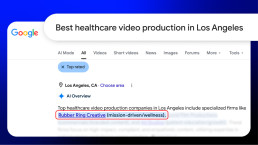
To rank in AI Overview, your content needs to be clear, helpful, well-structured, technically accessible, and trusted by Google. AI Overviews pull from pages that answer search intent quickly, explain topics clearly, and provide reliable information that is easy for both people and search engines to understand.
For brands, this means SEO is no longer just about keywords. It is about becoming the clearest and most useful answer in your category.
What Is Google AI Overview?
Google AI Overview is an AI-generated summary that appears at the top of some search results. It helps users understand a topic quickly by pulling information from relevant web pages and presenting a summarized answer.
AI-powered search is also expanding beyond Google. Platforms like ChatGPT and Google Gemini are changing how users discover brands, services, and information online. This is why websites now need to be optimized not only for search engines, but also for AI-driven discovery systems.
Instead of only showing a list of blue links, Google may now show a direct answer, supporting details, and links to websites that provide helpful information. This changes how brands need to approach SEO.
Can You Directly Rank in AI Overview?
You cannot force Google to feature your website in AI Overview. However, you can increase your chances by creating content that is easy to understand, easy to crawl, and highly aligned with what users are searching for.
The goal is not to trick AI. The goal is to make your content so clear, useful, and credible that Google can confidently use it as a source.
How to Rank in AI Overview
To rank in AI Overview, focus on five core areas:
- Answer the main question clearly at the top of the page.
- Use simple headings that match real search intent.
- Build topical authority around your service or niche.
- Add structured data and clean technical SEO.
- Show experience, trust, and brand credibility.
1. Start With a Clear Answer
AI Overview favors content that can be summarized easily. That means your page should answer the main question within the first few sentences.
For example, if your article is called “How to Rank in AI Overview,” the opening should directly explain what it takes to rank. Avoid long introductions that delay the answer.
Good AI-Optimized Opening Example
“To rank in AI Overview, your content should directly answer the search query, use clear headings, include structured data, demonstrate expertise, and be supported by a technically strong website.”
2. Structure Content Around Real Questions
AI search is question-driven. People are not only typing keywords. They are asking full questions like:
- How do I rank in AI Overview?
- How does Google choose AI Overview sources?
- Does schema help with AI Overview?
- How do I optimize my website for AI search?
Your content should answer these questions clearly using H2 and H3 headings. This makes the page easier to scan and easier for Google to understand.
3. Build Topical Authority
One article is not enough. To improve AI visibility, your website should have a strong content ecosystem around your core expertise.
For example, if your company wants to rank for AI SEO services, your website should include related pages about:
- AI search optimization
- Answer engine optimization
- Generative engine optimization
- SEO for service businesses
- Website content strategy
- Brand positioning for search visibility
This helps Google understand that your website is not just mentioning the topic once. It shows that your brand has depth and authority in the space.
4. Use Schema Markup
Schema markup helps search engines understand the meaning of your content. It does not guarantee placement in AI Overview, but it supports better machine readability.
For an article like this, useful schema types may include:
- Article schema
- FAQPage schema
- Organization schema
- Breadcrumb schema
- Service schema, when relevant
Important: your schema should match the visible content on the page. Do not add FAQ schema for questions that are not visible to users.
Learn more directly from Google Structured Data Guidelines.
5. Make the Page Easy to Crawl
Technical SEO still matters. If Google cannot easily crawl, render, or understand your website, your content has a lower chance of being used in AI-generated results.
Make sure your website has:
- Fast page speed
- Mobile-friendly design
- Clean heading structure
- Descriptive title tags and meta descriptions
- Internal links to related pages
- Optimized images with alt text
- No blocked important content
6. Write for Extraction
AI systems need content that can be pulled into summaries. This means your writing should be specific, concise, and organized.
Use short paragraphs, direct definitions, step-by-step lists, comparison tables, and FAQ sections. Avoid vague copy that sounds good but does not clearly explain anything.
Instead of This:
“We help brands unlock the future of digital growth through advanced innovation.”
Write This:
“We help brands improve visibility in Google Search and AI-generated results through SEO strategy, website structure, content optimization, and schema markup.”
7. Add First-Hand Expertise
AI Overview is more likely to trust content that shows real expertise. This is where brands can stand out.
Add original insights, examples, client experience, process details, screenshots, case studies, and expert commentary. Do not only repeat what every other article says.
For Pill Creative, this could include insights from branding, web design, SEO strategy, AI optimization, and how website structure impacts visibility.
8. Strengthen Brand Signals
Google needs to understand who you are, what you do, and why your website should be trusted.
To strengthen brand signals, make sure your website includes:
- A clear About page
- Author or company expertise
- Consistent service pages
- Client work or case studies
- Testimonials
- Clear contact information
- External brand mentions where possible
9. Optimize for Both SEO and AI Search
The best strategy is to combine traditional SEO with AI-focused optimization strategies. While SEO helps improve rankings and crawlability, AI optimization helps your brand become easier for AI systems like Google AI Overview, ChatGPT, and Gemini to understand and reference.
If you want to understand the difference between traditional SEO and modern AI optimization, read our guide on SEO vs AI Optimization
Choosing the right partner also matters. Here is our breakdown of how to choose the right AI optimization agency for SEO and AI visibility.
The best strategy combines:
- SEO: keyword targeting, rankings, metadata, backlinks, and crawlability.
- AEO: answer engine optimization for direct answers and question-based search.
- GEO: generative engine optimization for AI-generated search experiences.
10. Keep Content Updated
AI search changes quickly. A page that was useful last year may not be strong enough today. Review and update important SEO pages regularly.
Update your content when:
- Google releases new AI search features
- Your services change
- Search behavior shifts
- You have new case studies or examples
- Your competitors publish stronger content
Why AI Optimization Matters for Modern Brands
Search behavior is changing rapidly. Users are increasingly relying on AI-generated answers instead of browsing multiple websites manually. This means brands need content that is easy for AI systems to interpret, summarize, and trust.
AI optimization focuses on creating structured, authoritative, and machine-readable content that improves visibility across platforms like Google AI Overview, ChatGPT, Gemini, and other AI-powered search experiences.
Companies that adapt early have a stronger chance of becoming visible sources inside AI-generated answers.
Common Mistakes That Hurt AI Overview Visibility
- Writing long introductions without answering the question
- Using vague marketing language
- Targeting keywords without matching user intent
- Publishing thin content with no original insight
- Ignoring schema markup
- Having slow or poorly structured pages
- Not building authority around the topic
Final Takeaway
Ranking in AI Overview is not about gaming Google. It is about making your website the clearest, most helpful, and most trustworthy answer for your target audience.
Brands that want to stay visible need more than beautiful design. They need strategy-backed content, clean website structure, strong SEO, and AI-ready pages that search engines can easily understand.
At Pill Creative, we help brands build websites that are designed to look good, rank well, and show up in the future of search.
FAQ: How to Rank in AI Overview
How do I rank in Google AI Overview?
To rank in Google AI Overview, create helpful content that directly answers the search query, uses clear headings, includes structured data, demonstrates expertise, and is supported by strong technical SEO.
Does schema help with AI Overview?
Schema can help search engines better understand your content, but it does not guarantee inclusion in AI Overview. It should be used as part of a larger SEO and content strategy.
What type of content performs well in AI Overview?
Content that performs well in AI Overview is clear, concise, trustworthy, well-structured, and written around specific user questions. Definitions, step-by-step guides, FAQs, and expert explanations are especially useful.
Is AI Overview replacing SEO?
No. AI Overview is changing SEO, but it is not replacing it. Strong SEO is still needed for crawlability, relevance, authority, and visibility in search results.
How can my brand prepare for AI search?
Your brand can prepare for AI search by improving website structure, publishing helpful content, using schema markup, strengthening topical authority, and making your expertise clear across your website.

How to Choose a Branding Agency in Los Angeles
Choosing a branding agency in Los Angeles starts with understanding what you actually need from the relationship. Some companies need a new logo and visual identity. Others need deeper work: brand strategy, positioning, messaging, naming...
0 Comments1 Minute

Enterprise-Ready Branding: How to Build a Brand and Website That Scale
Startups can grow faster than their brands. A company may gain customers, improve its product, raise capital, and begin pursuing larger opportunities while its brand still looks and sounds like an early-stage startup. That gap becomes especially important when...
0 Comments13 Minutes

Your Website Is Not Your Deck: Why More Information Can Weaken Your Brand
A common website strategy mistake is treating a website like a pitch deck. The thinking is understandable: your company has a process, capabilities, technology, services, differentiators, use cases, proof points and a story worth telling...
0 Comments20 Minutes
