

AI Can Do Almost Everything. Except One Thing.
AI writes our copy. It builds our websites. It edits our videos, automates our workflows, and generates images in seconds. In creative work, it’s hard to find a task AI hasn’t touched.
So when we looked at what businesses are actually hiring freelancers for in 2026, we expected the most “AI-friendly” creative job to be disappearing. It’s small. It’s visual. It looks like exactly what image generators were built for.
Instead, demand for it is up. On Fiverr, searches for it rose 76% in a single six-month period.
It’s the logo.
The more businesses try AI for their logo, the clearer it becomes why this is the one creative job AI still can’t do well.
What AI does well in creative work
It’s worth being fair to AI first. Used well, it is an exceptional creative tool. It speeds up production, generates variations to react to, resizes and reformats finished work, writes first drafts, and helps teams apply an existing brand consistently across hundreds of assets. We use AI tools every day at Pill Creative Studio, and we explain where they fit in AI tools in creative work.
The pattern is clear: AI is excellent at producing more of something. It struggles with creating the one original thing everything else is built on. And a logo is exactly that.
Demand for logo design is rising, not falling
Freelance marketplaces are an early signal of what businesses actually buy, and the data points in the same direction:
- Fiverr: searches for logo design rose 76% in Fiverr’s June 2026 Business Trends Index, comparing November 2025–April 2026 with the previous six months (summary of the data).
- Upwork: graphic design remained one of the four most-hired skills on the platform in Upwork’s In-Demand Skills 2026 report, and demand held in areas many assumed AI would automate, including logo design, with clients continuing to hire while using AI tools alongside (summary of the report).
- Job posts: an analysis of more than 250,000 Upwork job posts found graphic design was the single most common skill in mid-2026, appearing in 12.9% of postings in July (source).
Part of this is simple math: record numbers of new businesses are launching in 2026, and every one needs an identity. (We cover what to do first in our brand launch checklist.) But part of it is a pattern we see with clients: many try an AI logo first, then come to a designer when they realize it doesn’t hold up.
Why AI is bad at logo design
It doesn’t know your business
A logo isn’t decoration. It’s a compressed version of a strategy: who the company is for, how it should feel, and what makes it different. A designer gets there through conversations, research, and judgment. An AI tool gets a one-line prompt. It can make something that looks like a logo, but it can’t know whether it’s the right logo for you.
It averages what already exists
AI image models learn from millions of existing images. Ask for a logo for a tech startup, and you get the most typical tech startup logo: a gradient, an abstract shape, a clean sans-serif. That’s why so many new brands now look alike. A logo’s job is to be recognized and remembered, and the average of everything is, by definition, forgettable. Being distinct is the whole point, which is why we started Escape Sameness.
You may not fully own it
This is the part most businesses don’t find out until later. According to legal analysis published in Bloomberg Law, guidance from the US Copyright Office means purely AI-generated content can’t be copyrighted, and prompts alone don’t create authorship. AI outputs can also unintentionally resemble existing brands, which increases the risk of trademark conflicts. For something as important as your logo, unclear ownership is a serious risk.
The cheap logo trap
Between AI generators and low-cost marketplaces, a logo has never been cheaper to get. In the same analysis of Upwork job posts, the median fixed budget for a logo design project was just $100.
But a cheap logo often becomes an expensive one. When it doesn’t scale, can’t be protected, or looks like a competitor’s, the business ends up paying again for a redesign, plus the cost of reprinting, rebranding, and re-explaining itself to customers. We cover more of these pitfalls in 5 mistakes businesses make when DIYing their branding.
Where AI does help with logo design
None of this means AI has no place in the process. It’s genuinely useful for:
- Gathering visual references and building mood boards
- Quickly exploring broad directions before a designer refines them
- Creating mockups to show how a logo looks on signs, apps, packaging, or vehicles
- Producing the many sizes and formats a finished logo needs
The original idea, the decisions, and the final craft still come from people. AI helps scale the result.
What a professionally designed logo should include
- A short discovery or strategy phase, so the logo reflects your business
- Original concepts, not templates or generated images
- A complete logo suite: primary, horizontal and stacked versions, icon, and one-color versions
- Clean vector files in every format you need for print, digital, and signage
- Clear ownership of the final design
- Simple usage guidance, so it’s applied consistently
And remember, your logo doesn’t have to say everything on its own. As we explain in your logo doesn’t need to explain what you do, its job is to be distinctive and memorable. Your name, message, and website do the explaining.
The one thing worth doing by hand
AI will keep getting better, and it will keep changing how creative work gets done. But a logo is the one piece of your brand that has to be original, ownable, and built to last. It’s the foundation everything else scales from.
If you need a logo or a complete brand identity, explore our branding services, compare custom and ready-made brands, or tell us about your project.
Frequently asked questions
Can AI design a good logo?
AI can generate logo-like images quickly, and it’s useful for exploring ideas. But AI logos are usually generic, hard to use at small sizes or in one color, not delivered as clean vector files, and may not be fully protectable. Most still need to be redesigned by a professional before they can be used as a real brand mark.
Can I copyright or trademark an AI-generated logo?
Purely AI-generated content generally can’t be copyrighted in the US, because copyright requires human authorship. A distinctive AI-generated logo may still be registered as a trademark, but it can also resemble existing marks. Run a trademark search and consult an attorney before adopting any logo.
How much does professional logo design cost?
Prices vary widely. Freelancers typically charge a few hundred to a few thousand dollars, while branding agencies usually start around $3,000 and go higher for logos that include strategy and a full identity system. The right investment depends on how important distinction and long-term use are to your business.
Is it okay to use AI for logo ideas?
Yes. AI is helpful for mood boards, references, and early exploration. Treat its output as inspiration, then work with a designer to create an original, well-crafted mark you fully own.
Launching a Business in 2026: The Brand Checklist
More people are starting businesses than ever. New business filings in the US reached record levels in 2026, with more than 560,000 formations in September alone, according to a report based on state filing data.
0 Comments15 Minutes
AI Tools in Creative Work: Where They Help and Where They Can’t
AI is great for speed and scale, but original creative work still has to come from people. How designers can use Claude, Figma, Adobe, Canva, and UX Pilot well.
0 Comments10 Minutes
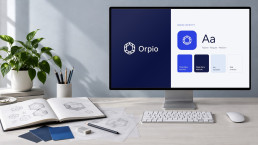
Custom Brand or Ready-Made Brand? How to Choose the Right Path
Custom branding and ready-made brands both get you a professional identity. Here’s how they compare on time, cost and control, and how to choose the right one.
0 Comments10 Minutes
